Why is my tent wet inside? Condensation explained
On this page
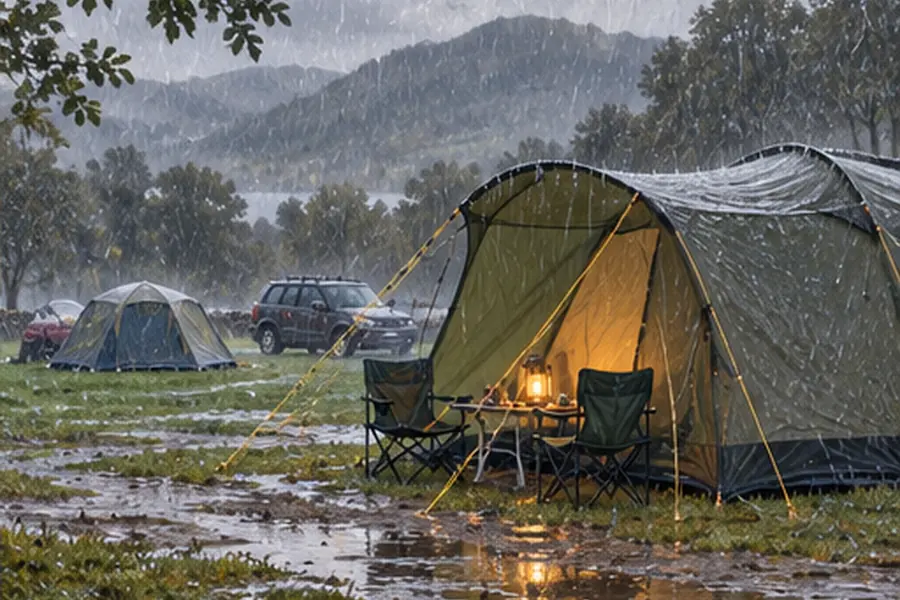
You wake up, touch the tent wall and it's dripping. It didn't rain, and the tent isn't leaking. That's condensation, and almost every camper in the UK meets it sooner or later. Here's why it happens and the simple things that cut it down.
What's going on
Air holds water vapour, and warm air can hold more than cold air. Inside your tent the air is warmed and moistened by you: breathing, sweating, damp clothes and wet dogs all add water vapour. Overnight the tent fabric cools down, especially on a clear, still night when heat radiates away to the sky. When the warm, damp air touches fabric that's colder than its dew point, the vapour turns back into water, just like on a cold window (Met Office on fog and dew).
So condensation isn't a fault. It's physics, plus the British weather.
When it's worst
- Clear, calm nights (more cooling, no breeze to clear damp air)
- High humidity, which is common in UK autumn and near water (Met Office on humidity)
- Pitching in a dip or by a river or lake, where cool, damp air collects
- A full tent: more people and dogs means more moisture
- Closed vents and doors zipped right up
- Wet kit stored inside the inner tent
Single-skin vs double-skin tents
A double-skin tent (separate inner and flysheet) usually still gets condensation on the flysheet, but the inner keeps it off you. The gap needs to stay clear, so make sure the inner isn't touching the fly. Single-skin nylon tents show it most. Polycotton and cotton (as in many bell tents) breathe and absorb some moisture, so they tend to feel drier, though they're not immune.

Eight ways to cut it
- Open the vents, all of them, even when it's cold. Airflow is the biggest single fix.
- Crack a door at the top on a dry, still night if the site and your tent allow it.
- Pitch on slightly higher ground, away from the water's edge and out of hollows.
- Pitch the fly tight so it doesn't sag onto the inner.
- Keep wet things out of the bedroom. Store wet coats and boots in the porch, or better, in the car.
- Never cook in the tent or the closed porch. Cooking adds a lot of moisture, and stoves and barbecues produce carbon monoxide, which can kill (NHS).
- Use a groundsheet or footprint so less damp rises from the ground into the tent.
- Pack a microfibre cloth and wipe the walls first thing, before the drips land on sleeping bags.
What not to do
- Don't seal every gap to "keep warm". You'll be warmer in a dry tent with a good sleeping bag than in a damp, sealed one.
- Don't run fuel heaters in a tent. Carbon monoxide is a real danger. If you're on an electric hook-up, use the tent heating checker and read how to heat a tent.
Is it condensation or a leak?
| Sign | Probably condensation | Probably a leak |
|---|---|---|
| Weather | Dry, clear, calm night | Rain, especially wind-driven |
| Where | All over the walls and roof | One spot, a seam or a zip |
| Pattern | Fine droplets everywhere | Drips or a wet patch in one place |
If it's a leak, check the seams and follow the maker's care guidance for reproofing when it's dry.
Related guides
- Tent hydrostatic head: what the millimetre rating measures
- Packing a wet tent: making the journey home easier
- Drying and storing a tent
Try the drying planner
FAQs
Is condensation a sign my tent is faulty?
No. It forms when warm, damp air inside meets cold fabric, so it can happen in any tent. A leak shows up in one place, usually after rain.
Can I stop condensation completely?
Not usually. You can cut it by keeping vents open, keeping wet kit out of the sleeping area and pitching away from damp hollows.