Camping in October and November: a UK shoulder-season checklist
On this page
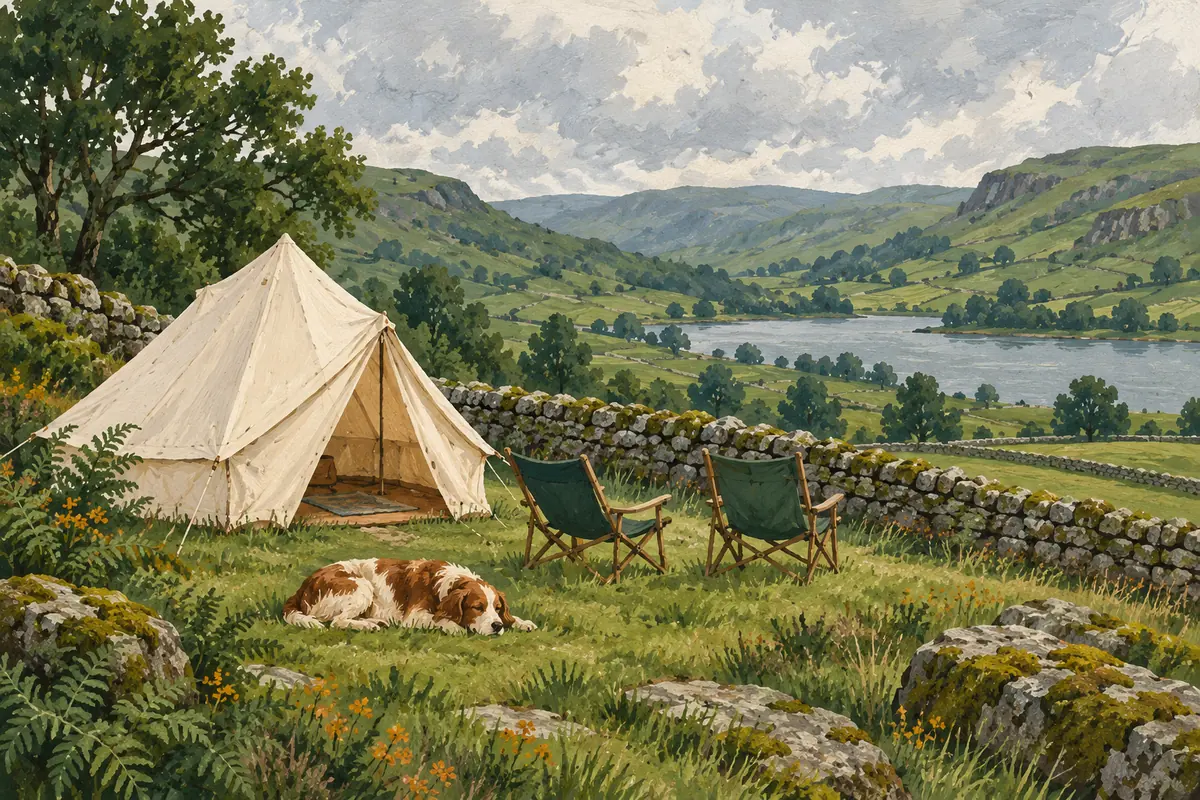
Autumn camping can be wonderful: quieter sites, low sun and cosy evenings. It's also colder, wetter and darker than most people plan for. This checklist gets a family through a late-season weekend comfortably.
1. Check the site is open, and the light
- Many campsites close at the end of October or run reduced facilities. Ring ahead and ask about hot water, the shop and hook-up.
- The clocks go back on the last Sunday in October, which is 25 October in 2026 (GOV.UK). After that it gets dark earlier in the evening, so check the sunset time for your site.
- Arrive with plenty of daylight to pitch. Pitching in the dark and rain is where trips go wrong.
2. Sleep warm (the big one)
- [ ] A sleeping bag rated for the night-time low, not the daytime high. Use the comfort rating, not the extreme one.
- [ ] Insulation underneath matters more than on top. Use a mat with a decent R-value, or a mat on a camp bed with a blanket over it.
- [ ] A hat and dry thermals for bed. Change out of the day's damp clothes.
- [ ] A hot-water bottle, filled as its maker describes. Check the maker's filling instructions.
- [ ] Kids: an extra layer and a spare sleeping bag liner.
3. Keep dry
- [ ] Pitch on raised ground away from water and hollows.
- [ ] Guy out the tent fully. Autumn gusts are stronger.
- [ ] Open the vents to keep condensation down (see why is my tent wet inside).
- [ ] A porch mat or tray for muddy boots, and bags for wet kit.
- [ ] Spare socks. Then more spare socks.
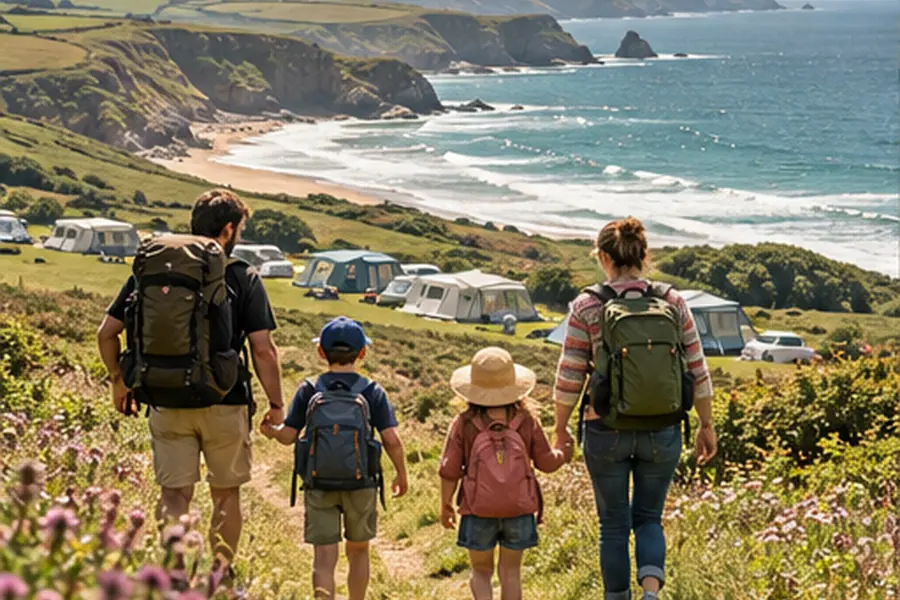
4. Cooking and warmth, safely
- [ ] Cook outside or under an open-sided shelter only. Never in the tent or a closed porch.
- [ ] Never bring a barbecue, stove or heater into a tent, even when it's cooling down. Carbon monoxide can kill, and you can't see or smell it (NHS). Consider a battery carbon monoxide alarm.
- [ ] Butane gas can struggle in the cold. Check your stove maker's guidance on fuel for cold mornings, and use the camping gas calculator to work out how much to take.
- [ ] A flask for hot drinks at night saves fiddling with the stove in the dark.
5. Light and power
- [ ] A head torch for everyone, plus spare batteries.
- [ ] A lantern for the tent: battery or rechargeable, not a gas lantern inside.
- [ ] Power banks charged. Cold drains batteries faster.
- [ ] Hook-up? Check your extension reel and how many watts you'll use.
6. Plan for the weather
- [ ] Check the Met Office forecast for the site, not just the nearest town (Met Office). Wind on exposed coasts and hills can be much stronger.
- [ ] Have a go or no-go rule: if the Met Office has a weather warning for the area, rebook or change plans.
- [ ] Pack an indoor plan: a café, museum or swimming pool nearby.
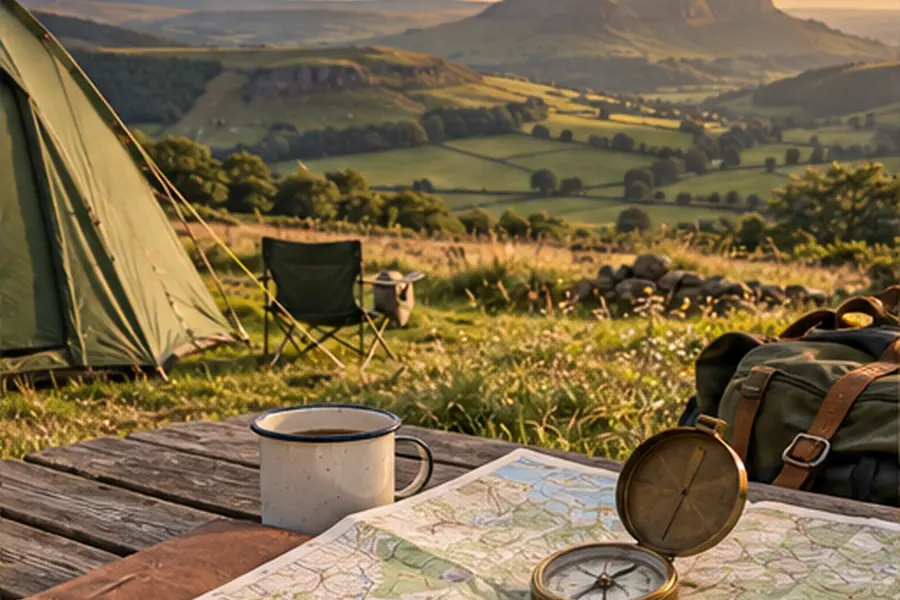
7. Pack-up day
- [ ] Pack the tent dry if you can. If not, dry it fully at home soon after, following drying and storing a tent.
- [ ] Shake out leaves and mud before you roll it.
Quick kit list
Sleeping bags (comfort-rated for the low) · insulated mats · thermals · hats · head torches · lantern · CO alarm · flask · hot-water bottle · stove + cold-weather gas · windbreak · porch mat · bin bags for wet kit · spare socks · microfibre cloth.
Next: use the sleeping bag rating finder and the checklist builder to tailor this for your family. Read camping in autumn too.
FAQs
Are UK campsites open in November?
Many close at the end of October or run reduced facilities, but some open all year. Ring ahead and ask about hot water, the shop and hook-up.
When do the clocks go back in 2026?
On the last Sunday in October, which is 25 October 2026 (GOV.UK).